
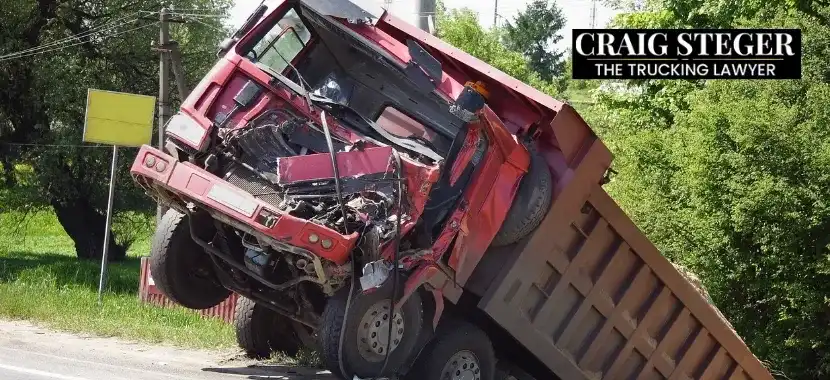
An accident involving commercial trucks can often lead to severe injuries and collisions involving multiple vehicles. Getting financial compensation is important to help you move forward and heal from your injuries, whether you are a truck driver or a passenger car driver, but significant evidence is needed for a strong claim. The truck accident black box evidence in Wisconsin is crucial to help support your injury case.
What Is a Black Box in Truck Crashes?
A black box, which is found in many modern vehicles, is also called an event data recorder (EDR). The black boxes that are in commercial trucks are especially important because they can be used to provide evidence such as the speed the driver was going and the amount of time the vehicle was driven. This information can be used to show whether or not a truck driver acted negligently, leading to the accident. Similar evidence may be important in a Farm Accident involving commercial vehicles or when representing an Injured Truck Driver.
Truck Accidents in Wisconsin
Truck tractors with a trailer were involved in 4,476 total crashes in Wisconsin in 2024, according to the state’s Traffic Crash Facts, including:
- 3,781 property damage accidents
- 651 injury accidents
- 44 fatal accidents
There were also 1,440 total crashes involving cargo vans, 2,799 crashes involving straight trucks, and 106 crashes involving a truck tractor without a trailer attached.
In 2025, there were 7,164 total crashes with large trucks, which resulted in 56 fatalities, 1,462 injuries, and 176 serious injuries. While this was a greater number of truck crashes than in prior years, there were thankfully fewer fatalities and injuries.
Truck accidents cause serious injuries and are very complex cases. Not only do individuals have to deal with severe and potentially life-altering injuries, but they also have to file claims to recover financial damages. These claims are much harder when commercial truck insurers are involved. Black boxes offer evidence that might help with an injury claim.
Information Recorded By Black Boxes
Although the exact data varies, most black boxes collect information on:
Speed
The data shows the speed of the truck in the seconds before the crash occurred, so it can show if the truck was exceeding the speed limit or a reasonable speed for the weather conditions.
According to the Wisconsin Traffic Crash Facts report, a total of 3,618 commercial motor vehicle (CMV) crashes occurred because a driver was speeding as a possible contributing factor, and 9,302 crashes occurred because a driver was going too quickly for the conditions. The majority of these incidents were caused by non-CMV drivers.
Driving Time
The time the truck was in use and how far the vehicle was driven is also part of black box data. This is important to compare to the federal regulations for hours of service, including determining if the driver took the required breaks.
Braking
The black box records information on braking patterns, including whether the brakes were used before the vehicle collision, and the pressure used to apply the brakes. In 10,165 CMV crashes in 2024, following too closely was a possible contributing factor. This included 79 injury crashes caused by CMV drivers and 2,312 injury crashes caused by other drivers.
Throttle and Steering
The data also includes information on the accelerator and the wheel, indicating whether the driver sped up, moved off the throttle, turned the wheel, or kept it straight. This can be important information about the actions the driver took before the crash.
Maintenance
Information in the black box might include engine information, fluid levels, and other potential issues that show the truck needed inspection and maintenance. This might show that the trucking company failed to address these issues, the company failed to complete inspections, or a driver failed to report the issues.
The Wisconsin Traffic Crash Facts reported possible contributing vehicle factors to accidents, including 12 injury accidents from vehicle brakes, 11 from vehicle tires, and two from steering.
Location
Many black boxes have GPS tracking on commercial vehicles. This can show where the truck was during the crash, as well as the truck’s route for delivery.
Seat Belts
The data may state whether those in the vehicle were wearing seat belts or not, as failing to wear seat belts can significantly worsen injuries in the crash.
Impact
A black box would show the exact moment of the collision. This can help verify witness statements and the information provided by others in the crash.
What Is the Importance of Black Box Data?
Black box data helps provide objective evidence to support your claims, making your case much stronger and helping you recover fair compensation. An analysis of the data might prove that a truck driver or their company was negligent. If you are a truck driver, the data might prove your claims that you were driving safely and reasonably. Black box data can:
- Assess liability. The data in the black box might help prove that a truck driver acted negligently, and this led to the crash, making them liable for your injuries. The data may also help you hold a trucking company liable for its negligence. The data can offer objective proof of your claims like speeding or insufficient vehicle maintenance.
- Corroborate witness testimony. The time and circumstances of the crash that were reported by eyewitnesses can be verified with the information in the black box. This can make your case stronger even if the type of negligence would not be shown on the black box.
- Provide a defense. The information in the black box can be used against claims by an insurance company that you were at fault. This is useful if you are a passenger car driver and the black box information shows that the company or truck driver was negligent. It is also useful if you are a truck driver, and the black box data shows that you were not operating the truck recklessly. Black box evidence can be particularly relevant in an Underride Accident or Car Accident case.
- Improve leverage. You are more likely to recover fair compensation when you have a strong case with clear evidence. In negotiations with an insurance company, a strong case means they are more likely to want to settle instead of going to court, and it can be easier to recover a fair settlement that actually covers your damages. If a fair settlement can’t be secured, you can take the case to court with the black box data as part of your evidence.
Liability in a truck accident is not only drivers in the crash. A truck driver may make an error or exceed their hours of service, but that doesn’t always make the truck driver the sole liable party.
Their trucking company or employer could be liable for many reasons, including encouraging or incentivizing drivers to ignore federal regulations, failing to vet drivers before hiring them, or not ensuring trucks are inspected and maintained.
When you hire a truck accident lawyer, they help you investigate and analyze the black box data and determine the full context of the information.
The Importance of Preserving Data
You have to act quickly to preserve black box data after a truck crash. Depending on the facts of the accident, trucking companies may try to overwrite black box data or allow it to be deleted. A preservation letter can be sent to provide written notice to the trucking company and their driver to ensure the information in the black box is preserved. There can be legal consequences if this letter is not followed.
Other Types of Evidence in Wisconsin Truck Accident Cases
Black box data is important in many cases, but it can’t be used alone. A strong truck accident case uses multiple types of evidence to understand the whole picture of the crash and what caused it. Other important evidence in these cases includes:
- Other types of telematics. Because not all black boxes record the same information, there may be other systems that are needed to get information about the engine or the driver’s location. These systems also need to be preserved and reviewed.
- Driver logs. Driver logs can show how long a driver worked and whether their logged hours match black box information.
- Employment records. A driver’s employment records can show their licensure, records for inspection, their training, communication with their employer, safety policy employment documents, and other key information. This information may be able to show whether the trucking company properly trained and vetted its drivers.
- Witness testimony. Passengers, drivers, or bystanders who saw the crash can provide first-hand information about what they saw in the moments leading up to the crash.
- Dashcam footage. Truck drivers and other drivers may have dashcams installed that provide clear information about the circumstances before and during an accident.
- Video and photos. This includes any traffic cameras or nearby security cameras, as well as photos and videos you took after the collision. Documentation of how vehicles were positioned, skid marks, the weather conditions, your injuries, and more can help.
- Expert witnesses. Key witnesses like accident reconstructionists and medical professionals can offer additional information about how the accident happened, an analysis of the black box data, and the impact of any injuries.
- Accident reports. After emergency responders are called to the scene, law enforcement officers will have important information about the crash, including initial assumptions about fault. This offers a useful third-party analysis of the accident.
- Inspection and maintenance records. This information can assess whether a truck should have been on the road, and whether the trucking company or the truck’s owner properly maintained, inspected, and repaired known issues. That evidence is especially important when the truck’s breakdown caused the crash.
- Medical treatment records. It’s important to save medical records that show the treatment of your injuries after a crash. This not only creates documentation of the costs of your injuries but directly connects the injuries to the crash.
There are many other forms of potential evidence, including cell phone records, cargo data, and more. Depending on the cause of your accident, different evidence may be needed to understand the full picture.
FAQs
Can a Black Box Prove Who Is At Fault?
A black box may be able to prove who is at fault in a truck accident. The black box might provide objective information about the time of the crash, whether the truck driver was speeding when the crash occurred, or whether the driver was driving hours longer than allowed under federal regulation. This information can help prove who was at fault, although additional information is often needed for a stronger claim for compensation.
Do Insurance Companies Check Black Boxes After an Accident?
In passenger vehicles, insurance companies usually cannot check black boxes after an accident, except with the driver’s consent or a court order. In commercial vehicles, insurance companies often have more access to black boxes.
Insurance companies will use all information available to try to avoid liability, which can include using an available black box for a vehicle. If black box information supports the insurance company’s goal to minimize liability, it will use that information.
How Long After a Truck Accident Can You File a Claim in Wisconsin?
After a truck accident in Wisconsin, you have three years to file a claim. If the motor vehicle accident caused someone’s death, then a claim for damages must be filed within two years. Each deadline, called the statute of limitations, is essential to be aware of. If you miss the statute of limitations, you will be barred from financial recovery for your injuries in a civil claim, such as those filed with the Circuit Court for La Crosse County.
Is Wisconsin a No-Fault State for Truck Accidents?
No, Wisconsin is not a no-fault state for truck accidents. If you are involved in an accident as a truck driver or with a commercial vehicle, then the driver who caused the crash can be held liable for the resulting damages. Claims are filed with their vehicle insurance, which might be personal car insurance or a commercial trucking company’s insurance coverage. Because the state is a no-fault state, evidence to prove fault is crucial.
Hire a Trusted Truck Accident Lawyer Like Craig Steger
When you have stronger evidence for your truck accident case, you are more likely to recover the compensation you need, including coverage for medical bills, lost income, property damage, and pain and suffering.
Craig Steger is an experienced truck accident attorney with proven success against large trucking companies and has a commercial driver’s license. He understands the regulations and requirements of the trucking industry from many different sides and works to help those who are injured in these collisions. Reach out to our firm today.

